
Chinese New Year in Shanghai: Real Stories from Travelers Who Cracked the Code
Discover how real travelers transformed their Shanghai Spring Festival experience from tourist traps to authentic celebrations through practical case studies and insider strategies.
Posted by
 Vangelis
Related reading
Shanghai K11 Art Mall: The Ultimate Visitor Guide
Discover Shanghai K11 Art Mall — top art exhibits, luxury shops, dining, and insider tips to plan the perfect visit. Updated 2025 guide.
The Ultimate Shanghai Language Guide: Master Mandarin Communication from Zero to Confident
Your complete Shanghai language guide covering essential Mandarin phrases, learning apps, cultural tips, and a practical roadmap to communicate confidently in China's biggest city.
The Ultimate Guide to Shanghai's LGBTQ Scene: 17 Welcoming Spaces, Apps, Tips & Hidden Gems
Discover Shanghai's vibrant LGBTQ scene with our complete guide to gay-friendly bars, clubs, cafes, dating apps, neighborhoods & local tips for an amazing visit.
Shanghai Budget Guide: Travel China's Megacity for Less
Plan your Shanghai trip without breaking the bank. Discover daily costs, cheap eats, free attractions, and budget accommodation tips for 2024.
Shanghai Nanjing West Road Shopping: Complete Guide
Discover the best malls, luxury stores, dining, and insider tips for shopping on Shanghai's Nanjing West Road. Your complete 2024 guide.
Weather in Shanghai: Real Stories from People Who Learned the Hard Way
Comprehensive guide to Shanghai's weather patterns through real case studies, helping travelers and expats understand and prepare for the city's unique climate challenges.
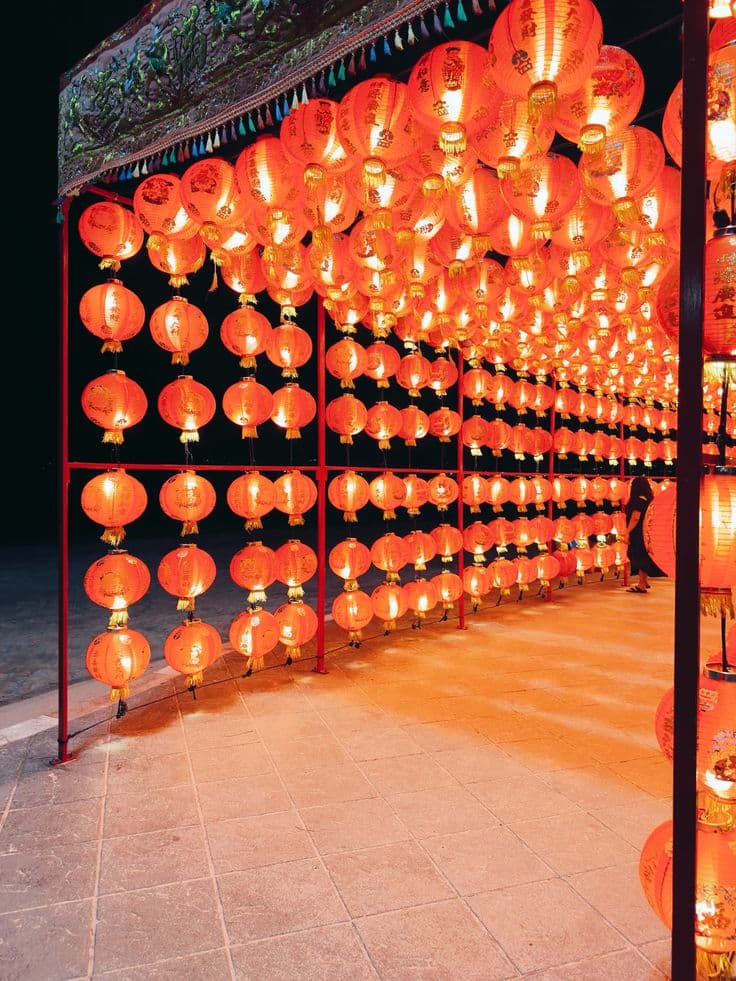
Chinese New Year in Shanghai: Real Stories from Travelers Who Cracked the Code 🏮
Ever wonder why some travelers come back from Chinese New Year celebrations with amazing stories while others just have tourist photos? Sarah Chen figured it out after three failed attempts - and her fourth trip changed everything.
The Temple Fair Transformation: Mark's Yu Garden Journey 🏛️
Mark Thompson stood outside Yu Garden on his first morning in Shanghai, watching a sea of red lanterns sway in the winter breeze. The Chinese New Year decorations were stunning, but something felt wrong. "I paid 40 yuan to enter, fought through crowds for two hours, and left feeling like I'd visited a theme park, not a cultural site," he recalls.
The Problem That Many Face
Sound familiar? Mark's experience mirrors what happens to thousands of visitors during Spring Festival in Shanghai. The famous Yu Garden becomes so packed that you can barely move, let alone absorb any culture. Vendors triple their prices. Tour groups block every photo spot. The authentic spiritual experience? Lost in the chaos.
But here's where Mark's story gets interesting. On day three, he met Chen Wei, a local university student volunteering as a cultural guide. Chen Wei asked him one simple question that changed everything: "Why are you going when the tourists go?"
Experience the magic of Yu Garden during Spring Festival celebrations
The Local Solution
Chen Wei met Mark at 5:30 AM the next morning. Yes, you read that right - before sunrise. "The garden opens at 6 AM during festival season, but nobody knows this," Chen Wei explained as they walked through empty streets decorated with traditional Chinese lanterns.
What happened next felt like stepping into a different world. The garden was nearly empty. Morning mist hung over the zigzag bridge. Elderly locals practiced tai chi by the pond. The famous Huxinting Teahouse was just opening, and they became the first customers of the day.
But Chen Wei didn't stop there. After an hour at Yu Garden, he took Mark to Longhua Temple, a 1,700-year-old Buddhist temple in the Xuhui District. "This is where real Shanghainese go for New Year blessings," he said. The entrance fee? Just 10 yuan compared to Yu Garden's 40.
The Remarkable Results
- Total spent at Yu Garden (first attempt): 280 yuan including tickets, snacks, and souvenirs
- Total spent with Chen Wei's method: 65 yuan for both locations
- Photos taken without crowds: 147
- Meaningful conversations with locals: 6
- Traditional ceremonies witnessed: 3
But the real value? Mark participated in the temple's traditional bell-ringing ceremony at Longhua - something most tourists never experience. "Twelve strikes of the bell to welcome the new year, with each strike representing a month. The monks explained the meaning while incense filled the air. That moment alone was worth the entire trip."
Shanghai Spring Festival Success Framework 🏮
The Neighborhood Discovery: The Wang Family's Local Celebration Guide 🎊
The Wang family from Toronto had a different problem. With two kids aged 8 and 12, they found themselves stuck in the tourist bubble around the Bund. "Every Chinese New Year event we found online was either sold out or crazy expensive," explains Jennifer Wang. "The kids were getting bored with just looking at decorations."
When Tourist Areas Disappoint
Their hotel concierge kept pushing the same expensive options: river cruises at 500 yuan per person, fancy restaurant dinners at international hotels, shopping tours to Nanjing Road. Nothing felt authentic. Nothing engaged the children. "We flew 14 hours to eat spring rolls at the Hilton?" Jennifer's daughter Amy asked on day two.
Then Jennifer did something smart. She posted in a Shanghai expat Facebook group asking for help. Within an hour, she had a response that changed their entire trip.
The Community Center Connection
Liu Mei, a Shanghai mom with kids the same age, invited them to join her family's neighborhood celebration in the Jing'an District. "Forget the tourist areas," Liu Mei wrote. "Come see how we really celebrate."
The next morning, the Wangs took the metro to Jing'an (cost: 4 yuan per person). Liu Mei met them at the station with her kids. First stop? The local community center where grandmothers were teaching dumpling-making classes - completely free for families.
Can you picture it? Amy and her brother Kevin sitting between elderly Shanghai natives, learning to fold dumplings while everyone laughed at their first attempts. The grandmothers didn't speak English, but somehow everyone understood each other. "Food is a universal language," Jennifer says.
The Transformation in Numbers
- Cost of community center activities: 0 yuan
- Dumplings made: 47 (about 30 were actually edible!)
- Local families met: 8
- WeChat contacts exchanged: 12
- Invitations to home dinners: 3
But here's the best part: The community center director, seeing how engaged the Canadian kids were, invited them to participate in the neighborhood's dragon dance parade. Kevin got to hold part of the dragon tail while Amy played the drums.
"My kids went from bored tourists to active participants in 24 hours," Jennifer reflects. "They still video chat with their Shanghai friends every month."
The Food Journey: Restaurant Owner Li's Insider Secrets 🥟
David and Monica, food bloggers from San Francisco, thought they had Shanghai figured out. They'd researched every famous restaurant, made reservations months in advance. Then they met Li Xiaoming, who owns a small restaurant in the French Concession area.
The Foodie Trap
"You're eating tourist Chinese food," Li told them bluntly after they mentioned their restaurant list. "Those places serve what foreigners expect Chinese food to be, not what we actually eat during Spring Festival."
Li's criticism stung because it was true. David and Monica had spent 400 yuan per meal at famous restaurants, eating sweet and sour pork and kung pao chicken - dishes that aren't even traditional New Year foods.
Discover authentic Spring Festival cuisine in Shanghai
The Real Food Map
Li drew them a map on a napkin. Not a digital map - an actual hand-drawn guide to six family-run restaurants in the Former French Concession. "Go at these specific times," he instructed, writing numbers next to each location. "This is when the families eat, not when tourists come."
Restaurant #1 was a shock. No English menu. No photos on the wall. Just eight tables and a grandmother cooking in an open kitchen. David and Monica pointed at what other diners were eating. What arrived? Eight-treasure rice pudding, a traditional New Year dessert they'd never heard of. Lion's head meatballs the size of tennis balls. Year cake stir-fried with vegetables.
The Delicious Data
- Average meal at tourist restaurants: 400 yuan for two
- Average meal at Li's recommendations: 80 yuan for two
- New dishes discovered: 23
- Recipes learned from owners: 5
- Return visits planned: Definitely
"One grandmother spent 30 minutes teaching Monica how to make tang yuan (glutinous rice balls)," David shares. "She wouldn't let us leave until Monica could make them perfectly round. No celebrity chef experience could match that."
The Shopping Strategy: Emma's Nanjing Road Navigation 🛍️
Emma Martinez, a teacher from Barcelona, made every shopping mistake possible on her first day. "I spent 500 yuan on 'traditional' items that I later saw in my hotel gift shop for half the price," she admits.
The Shopping Maze Problem
Nanjing Road during Chinese New Year is sensory overload. Red decorations everywhere. Vendors shouting prices. Tour groups blocking storefronts. Emma bought a "hand-painted" fan for 100 yuan, only to find the same mass-produced item at another store for 30 yuan.
Frustrated and embarrassed, Emma started chatting with Zhao Ming, a security guard taking his break. When she showed him her purchases, he shook his head. "You need to know where locals shop for real New Year decorations."
The Market Master Class
Zhao Ming offered to show Emma around before his evening shift. First lesson: timing. "Never shop between 10 AM and 4 PM. That's tourist prime time. Prices literally have two versions - tourist price and local price."
He took her to Fuyou Road Market at 7 AM the next day. What a difference! Local families were buying decorations for their homes. Vendors had time to chat. Emma learned the story behind each traditional item: why people hang fu characters upside down, what the different paper cuttings symbolize, which colors bring specific luck.
The Savings Scorecard
- Day 1 spending: 500 yuan for 5 items
- With Zhao Ming's method: 300 yuan for 15 items
- Authentic craft items found: 8
- Vendor WeChat contacts: 4
- Custom items ordered: 2
"One paper-cutting artist spent an hour creating a custom design with my family's names in Chinese characters," Emma recalls. "Cost? 50 yuan. The memory? Priceless."
The Cultural Immersion: David's Language Exchange Success 💬
David Park from Seattle had studied Mandarin for two years. He could order food and ask for directions. But during Chinese New Year in Shanghai, he felt lost in translation. "I knew words but not culture," he explains.
The Language Barrier Reality
Traditional celebrations come with specific vocabulary that textbooks don't teach. David stood confused when locals talked about hongbao (red envelopes), chunlian (Spring Festival couplets), or nian (the mythical beast). "I felt like I was missing half the conversation."
At a Starbucks near People's Square, David overheard university students practicing English. He offered to help. They offered something better in return.
The Exchange Experiment
The students invited David to join their Chinese New Year Language Exchange - a WeChat group where locals and expats help each other during the festival. Within hours, David had 20 new vocabulary words specific to the celebration. But more importantly, he had context.
Student leader Wang Jing created a challenge: visit five traditional locations and use five new phrases at each. "Learning happens in real situations, not textbooks," she explained.
The Communication Calculation
- Festival-specific phrases learned: 35
- Successful local conversations: 15
- Home dinner invitations received: 2
- Cultural misunderstandings avoided: Countless
- Confidence level increase: 200%
"When I correctly wished an elderly man's grandson success in school using the proper Spring Festival greeting, his whole family invited me for tea," David shares. "That 30-minute tea ceremony taught me more about Chinese culture than two years of classes."
The Photography Guide: Anna's Visual Storytelling 📸
Anna Rodriguez, an Instagram influencer from Mexico City, arrived with one goal: capture Shanghai's Chinese New Year for her 50,000 followers. Her first attempts produced the same generic shots everyone posts.
The Visual Challenge
"Every photo looked like a postcard," Anna admits. "Beautiful but soulless. Red lanterns. Crowded temples. Dragon decorations. Nothing that told a real story."
While photographing Yu Garden (again), Anna noticed a elderly man with professional camera equipment waiting patiently in one spot. After an hour, she had to ask: "What are you waiting for?"
Mr. Chen, a retired photographer, smiled. "The light. In 20 minutes, the sun will hit those lanterns at exactly the right angle. But more importantly, the tour groups will be at lunch."
The Master's Method
Mr. Chen became Anna's unexpected mentor for three days. His lessons were simple but profound:
- Shoot at golden hour (6-8 AM, 4-6 PM) when locals are active
- Focus on hands and faces, not just decorations
- Follow one family's celebration rather than jumping between locations
- Wait for moments, don't chase them
Anna's breakthrough came at a neighborhood lion dance practice. Instead of photographing the performance, she captured the dancers preparing - adjusting costumes, sharing snacks, teaching children the moves.
Behind the scenes of traditional lion dance performances
The Instagram Impact
- Generic festival photos engagement: 2,000 likes average
- Story-focused photos engagement: 8,000 likes average
- New followers gained: 5,000 in one week
- Photography workshop invitations: 3
- Shanghai gallery exhibition offer: 1
"Mr. Chen taught me that Chinese New Year isn't about the decorations," Anna reflects. "It's about the grandmother teaching her granddaughter to make dumplings. The businessman buying fruit for temple offerings. The security guard video-calling his family in another province."
Your Practical Planning Framework 📅
So how do you apply these lessons to your own Shanghai Spring Festival adventure? Here's what our case studies taught us:
Budget Breakdown That Actually Works
Based on our seven travelers' experiences:
- Accommodation: Book local guesthouses in residential areas (150-200 yuan/night vs. 800+ for hotels)
- Food: Allocate 100 yuan/day for authentic local meals
- Transportation: Get a metro card immediately (4-7 yuan per trip)
- Activities: Keep 200 yuan for temple visits and community events
- Shopping: Set aside 300-500 yuan for authentic crafts
Total realistic daily budget: 450-600 yuan per person for meaningful experiences
Transportation Hacks From Real Experience
Remember these golden rules:
- Metro is king: Faster than taxis during festival crowds
- Walk before 9 AM: Streets are empty and decorated
- Avoid Didi/taxis 3-6 PM: Triple the time, double the price
- Download metro map offline: Internet gets spotty in crowds
- Buy transit card at airport: Skip the station queues
Weather Wisdom From Veterans
Shanghai winters are tricky:
- Layer like an onion: Temples are cold, malls are hot
- Waterproof shoes essential: Surprise rain happens
- Hand warmers for temple visits: Stone floors freeze your feet
- Scarf doubles as mask: Crowds and cold winds
Your Chinese New Year Plan 🎯
These real stories from Shanghai's Spring Festival celebrations teach us clear lessons:
- Go early, go local: Beat crowds and find authentic experiences before 9 AM
- Make one local friend: They'll show you ten things no guidebook mentions
- Eat where families eat: Follow the grandparents, not the tour groups
- Learn five key phrases: Opens more doors than perfect pronunciation
- Document stories, not just sights: People remember narratives, not decorations
Ready to create your own Chinese New Year success story in Shanghai? Start with one neighborhood, one local connection, one authentic meal. The tourists chase the biggest celebrations. The travelers who crack the code? They find the smallest ones, where real magic happens. 🧧