
Shanghai's Literary Revolution: How Writers Transformed a City Into the Paris of the East
Discover how Shanghai intellectuals and writers like Lu Xun and Eileen Chang transformed Chinese literature through revolutionary approaches, creating a lasting literary legacy that bridges East and West.
Posted by
 Vangelis
Related reading
Shanghai Foreign Concessions: The Untold Story of China's 'Foreign City'
Discover how foreign powers controlled parts of Shanghai from 1845-1943. Explore the history, daily life, and lasting legacy of the Shanghai foreign concessions that shaped modern China.
Discover the fascinating history of Shanghai's treaty port era. Learn about foreign concessions, daily life, architecture, and how this period shaped modern Shanghai. Includes interactive timeline, maps, and expert resources.
Twenties Era Shanghai: The Ultimate Guide to the Paris of the East
Discover the magic of twenties era Shanghai — the glamorous nightlife, stunning fashion, jazz clubs, and the fascinating blend of East meets West that made it the Paris of the East.
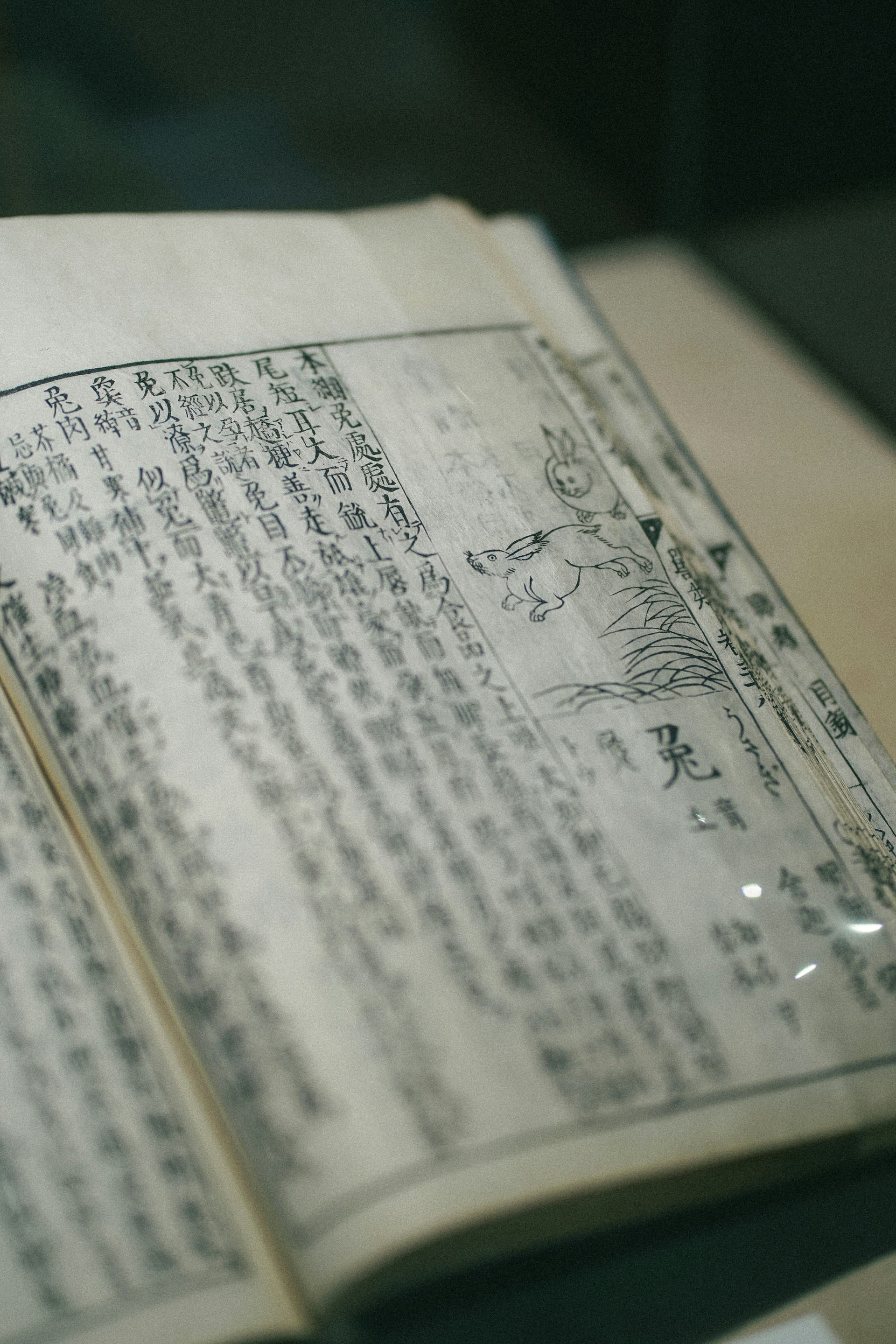
Shanghai's Literary Revolution: How Writers Transformed a City Into the Paris of the East 📚
Have you ever wondered how a single city became the birthplace of modern Chinese literature? Eileen Chang, a young woman writer in 1940s Shanghai, went from unknown to literary legend by doing something no one else dared—she wrote about real life in a city torn between old and new. Her story shows us exactly how Shanghai intellectuals changed not just Chinese writing, but the entire cultural landscape of Asia.
The Golden Age Writers Who Built Literary Shanghai 🌟
Lu Xun's Revolutionary Path: From Doctor to Literary Giant
Picture this: A young medical student sits in a Japanese classroom watching slides of the Russo-Japanese War. One image stops him cold. It shows Chinese people about to watch another Chinese man's execution—and they look bored. This moment changed everything for Zhou Shuren, who would become Lu Xun, the father of modern Chinese literature.
Lu Xun's Transformation Journey
The Problem He Faced:
Lu Xun saw that China's real sickness wasn't physical—it was spiritual. Traditional Chinese writing used classical language that ordinary people couldn't read. Writers followed strict rules that made stories feel distant and unreal. Worse yet, government censors controlled what writers could say. How could literature wake up a sleeping nation when the tools themselves were broken?
His Bold Solution:
Instead of becoming a doctor of bodies, Lu Xun decided to become a doctor of souls through writing. He did three game-changing things:
- Wrote in everyday language that regular people actually spoke
- Created the modern Chinese short story with "A Madman's Diary"
- Used dark humor and irony to slip past censors while criticizing society
Remember Ah Q, his most famous character? This foolish man who always claims moral victory even when losing became a mirror for Chinese society. Readers laughed, then realized they were laughing at themselves.
The Remarkable Results:
Lu Xun's new style of writing in Shanghai's literary scene sparked a revolution. Within ten years:
- Over 100 new literary magazines started in Shanghai
- Thousands of young writers began using vernacular Chinese
- His stories became required reading in schools
- Even today, every Chinese student reads Lu Xun
But here's what really matters: Lu Xun proved that one writer with the right approach could change an entire nation's way of thinking. His Shanghai home at 9 Dalu New Village became a pilgrimage site for young intellectuals in Shanghai.
Eileen Chang's Cross-Cultural Success: Bridging Two Worlds
While bombs fell on Shanghai in 1943, a 23-year-old woman sat in her apartment writing stories that would make her the city's most celebrated author. Eileen Chang (Zhang Ailing) faced a challenge that seemed impossible: How do you write about love and daily life when your city is at war?
The Problem She Faced:
Chang lived between two worlds. Born into an aristocratic family, educated in British Hong Kong, living in Japanese-occupied Shanghai—she didn't fit anywhere. Male writers dominated Shanghai literature. They wrote about big ideas like revolution and nationalism. Who would care about a young woman's stories of romance and family drama?
Her Revolutionary Solution:
Instead of fighting against her unique position, Chang embraced it. She:
- Mixed Chinese storytelling with Western psychology to create something totally new
- Wrote about ordinary women's lives with extraordinary depth
- Used Shanghai's blend of cultures as her canvas, not her limitation
- Published in popular magazines instead of literary journals, reaching real readers
Her story "Love in a Fallen City" shows this perfectly. It follows a divorced woman trying to remarry for security—not a revolutionary topic, right? Wrong. By setting this personal story against Shanghai's fall to Japan, Chang showed how war affects regular people's hearts, not just headlines.
The Stunning Results:
Chang's approach created a new path for Shanghai writers:
- Her first collection sold out in four days
- Hollywood adapted her works into films
- She influenced generations of Chinese women writers
- Today, she's studied in universities worldwide
Think about this: A young woman writing "small" stories about love during wartime became more influential than many "serious" male writers. Why? Because she understood that literature in Shanghai succeeds when it connects to real human experience.
The Coffee House Revolution: Where Ideas Became Movements ☕
The Uchiyama Bookstore Network: Shanghai's Secret Literary Laboratory
Can a single bookstore change literary history? In 1920s Shanghai, a small Japanese bookshop run by Uchiyama Kanzō proved the answer is absolutely yes.
Literary Shanghai: Key Locations Map
The Problem They Faced:
Shanghai intellectuals in the 1920s faced a dangerous situation. The government watched writers closely. Meeting openly to discuss new ideas could mean arrest. Foreign books were hard to find and expensive. Chinese and Japanese writers couldn't easily connect. How could literary movements grow without safe spaces to meet and share ideas?
Their Clever Solution:
Uchiyama didn't just sell books—he created Shanghai's first literary salon disguised as a bookstore. Here's what made it work:
- The bookstore's upper floor became a secret meeting room
- Free tea and seats encouraged writers to stay and talk
- Book lending system let poor writers read expensive foreign books
- Translation services connected Chinese and Japanese writers
- Hidden message board let writers communicate safely
Lu Xun held court here every Sunday afternoon. Young writers like Ba Jin and Mao Dun came to learn. Japanese writers visiting Shanghai stopped by to connect with Chinese colleagues.
The Transformative Results:
This one bookstore sparked changes throughout Shanghai's literary world:
- The Creation Society, China's first modern literary group, was born here
- Over 50 important Chinese writers got their start in these meetings
- The Chinese League of Left-Wing Writers planned their activities upstairs
- Connections made here led to translations bringing world literature to China
Here's the amazing part: When police finally raided the store in 1932, they found... just books. The network had grown so strong that it survived without the physical space.
From French Concession Cafés to Literary Landmarks
Walk down Shanghai's tree-lined streets today, and you'll pass cafés where literary history was written. But how did coffee houses become the engines of Shanghai literature?
The Challenge:
Traditional Chinese tea houses were too public and formal for young writers' radical discussions. Writers needed neutral ground where East and West could meet, where new ideas could flow as freely as the coffee.
The Creative Solution:
The French Concession's cafés became literary laboratories. Each developed its own personality:
- Café de la Paix: Where Russian writers fleeing the revolution met Chinese poets
- Sullivan's: Where Eileen Chang wrote her famous stories at a corner table
- DD's Coffee: Where the modernist poetry movement took shape
These weren't just places to drink coffee. Writers turned them into:
- Informal writing workshops where authors critiqued each other's work
- Publishing headquarters where magazine editors met contributors
- Translation centers where foreign works became Chinese
- Networking hubs where young writers met established authors
The Lasting Impact:
The café culture transformed how Shanghai intellectuals worked:
- Writing became social, not solitary
- Ideas crossed cultural boundaries daily
- Young writers learned by observation
- The mixing of languages created new literary styles
Can you imagine? Some of China's greatest literary works were written on café napkins, edited over espresso, and published through connections made over coffee.
Modern Shanghai: New Voices, New Stories 🏙️
Wang Anyi's Contemporary Vision: Capturing a Changing City
How do you write about a city that changes faster than you can type? Wang Anyi, born in 1954, faced this exact challenge when she decided to chronicle modern Shanghai's transformation.
The Problem She Faced:
Shanghai in the 1980s was exploding with change. Old neighborhoods vanished overnight. New skyscrapers appeared like mushrooms after rain. Traditional Shanghai culture mixed with international influences. Previous Shanghai literature focused on the city's golden age past. But who would tell the story of Shanghai's present and future?
Her Innovative Solution:
Wang Anyi created a new type of Shanghai novel that:
- Followed multiple generations to show change over time
- Mixed Shanghai dialect with standard Chinese to capture authentic voices
- Focused on ordinary people in extraordinary times
- Used specific Shanghai neighborhoods as characters themselves
Her masterpiece "The Song of Everlasting Sorrow" follows one woman from 1940s Shanghai through the Cultural Revolution to the 1980s. By keeping the focus personal while the city transforms around her protagonist, Wang shows how individuals navigate massive historical changes.
Shanghai Literary Evolution Timeline
The Powerful Results:
Wang Anyi's approach revolutionized contemporary Shanghai writing:
- Won the Mao Dun Literature Prize, China's highest literary honor
- Inspired a new generation to write about modern urban life
- Her works translated into 30+ languages
- Created a template for capturing rapidly changing cities
Think about what this means: A writer found a way to make a speeding city slow down long enough to see itself clearly.
International Writers' Shanghai Success: When Outsiders Become Insiders
Can foreign writers really understand and write about Shanghai? The success stories of international authors in Shanghai prove that outsider perspectives can reveal truths insiders might miss.
The Challenge They Faced:
International writers arriving in Shanghai face huge obstacles:
- Language barriers limit deep understanding
- Cultural nuances escape outsider observation
- Local literary circles seem closed to foreigners
- Publishers doubt foreign perspectives will resonate
Their Smart Strategies:
Successful international Shanghai writers found unique approaches:
- Partnered with local writers for cultural authenticity
- Focused on expat experiences as a bridge between worlds
- Wrote in English first, then collaborated on Chinese translations
- Used Shanghai as setting for universal human stories
Take Qiu Xiaolong, who writes the Inspector Chen mysteries. Though living in America, he sets his detective stories in Shanghai, using crime fiction to explore Chinese society's contradictions. His books succeed globally because readers get both an exciting story and a window into Shanghai life.
Or consider Nicole Mones, whose novel "The Last Chinese Chef" weaves Shanghai's food culture into a compelling personal story. By focusing on something specific—cuisine—she could explore broader themes of tradition versus modernity.
The Surprising Outcomes:
International writers have enriched Shanghai's literary scene:
- Built bridges between Chinese and world literature
- Brought fresh perspectives to familiar Shanghai themes
- Created new hybrid genres mixing Eastern and Western styles
- Opened doors for more cultural exchange
Here's what's remarkable: Sometimes it takes an outsider's eyes to help insiders see their own city's magic.
The Publishing Powerhouse: How Writers Find Success Today 💼
Shanghai's Modern Literary Infrastructure
Want to know why Shanghai produces more successful writers than any other Chinese city? It's not just talent—it's the system that turns talent into careers.
The Modern Publishing Ecosystem:
Today's Shanghai intellectuals benefit from:
- Over 40 publishing houses competing for new voices
- The Shanghai Writers' Association providing grants and workspace
- Literary festivals like Shanghai International Literary Festival connecting writers globally
- Writing programs at Fudan and other universities training new talent
- Online platforms letting writers build audiences before traditional publication
The Shanghai Literature and Art Publishing House alone publishes 300 new titles yearly. They don't just print books—they develop writers through editing support, marketing campaigns, and international rights sales.
Digital Revolution's Impact:
The internet transformed how Shanghai literature reaches readers:
- Writers serialize novels online, building fanbases chapter by chapter
- Social media lets authors connect directly with readers
- E-books make Shanghai writing instantly available worldwide
- Translation apps help international readers access Chinese works
Success Pathways for Emerging Writers:
New writers in Shanghai follow proven paths:
- Start online with platforms like Qidian or Jinjiang Literature City
- Join writing groups for feedback and connections
- Enter competitions like the Shanghai Literature Prize
- Attend workshops at the Shanghai Writers' Association
- Build relationships at literary events and book fairs
Consider this fact: Shanghai publishes more literature than Beijing, despite being the business capital. Why? Because Shanghai treats writing as both art and business.
The M50 Creative District: Where Artists and Writers Collide
Ever wondered what happens when you put writers, painters, musicians, and filmmakers in the same neighborhood? Shanghai's M50 art district shows us exactly that—and the results are electric.
The Creative Collision:
In this converted factory complex by Suzhou Creek, Shanghai writers work alongside visual artists. This proximity creates:
- Cross-media collaborations where stories become exhibitions
- Experimental literature influenced by visual art
- Performance poetry events mixing words with music
- Graphic novels born from writer-artist partnerships
Young intellectuals in Shanghai flock here because traditional boundaries don't exist. A novelist might share morning coffee with a sculptor, leading to new ways of thinking about narrative structure.
The Results Speak Volumes:
- Over 30 literary events monthly
- New literary forms emerging from artistic cross-pollination
- International recognition for Shanghai's experimental writing
- A new generation viewing literature as multimedia art
Actionable Lessons from Shanghai's Literary Legacy 📝
After studying these transformation stories from Shanghai's literary world, here are the key lessons every writer and creative can apply:
- Embrace Your Unique Position
Eileen Chang succeeded by using her multicultural background as strength, not weakness. Your different perspective might be exactly what readers need. - Create Safe Spaces for Ideas
The Uchiyama Bookstore shows that movements need meeting places. Build or find communities where creative exchange happens freely. - Mix High and Low Culture
Shanghai writers succeeded by blending literary art with popular appeal. Don't be afraid to publish where readers actually are. - Use Specific Local Details for Universal Stories
Wang Anyi's Shanghai neighborhoods speak to anyone who's watched their hometown change. The more specific your setting, the more universal your themes become. - Collaborate Across Boundaries
Shanghai's success comes from Chinese-foreign, traditional-modern, artist-writer collaborations. Your next breakthrough might come from unexpected partnerships. - Treat Writing as Both Art and Business
Shanghai intellectuals understand that reaching readers requires strategy. Building a writing career needs the same planning as any professional path. - Start Where You Are
Lu Xun began by translating foreign works before writing his own. Every Shanghai success story started with a first small step.
Remember: Shanghai became the Paris of the East not through any single genius, but through writers who dared to experiment, connect, and persist. Whether you're writing your first story or your fiftieth, these Shanghai lessons light the path forward. The city that transformed Chinese literature shows us that with the right approach, any writer can transform their world—one story at a time.